This site lay mostly to the east of the line of the 19th century railway line (later a road), c.150m from the river bank and c.300m from the British hilltop fort at Saras East. It was first identified in 1965, due to the presence of four large stone-covered tumuli, if in an area much disturbed by diggings, linked to the construction of the railway. There were almost no surface sherds or bone fragments visible. One tumulus covered grave (1) was excavated in January 1965. It was decided that that further excavations might be valuable, with a view to refining ‘X-Group’ pottery chronology, as the material seemed likely to date to the very late X-Group period, when Christianity was appearing in the region.
The surface of the site was cleared and the site planned (by AJM) in November 1965 when the ASSN returned to the area. Two further tumuli (2-3) were excavated and the surface clearance revealed c.19 graves, all apparently plundered. The grave mouths were rectangular, three (one with a tumulus) were oriented east-west, and presumed ‘Christian’, the rest being oriented north-south and ‘X-Group’. As such this site is one of many in the region probably dating to the late-fifth and sixth centuries, and spanning the period which saw the arrival of ‘Christian’ burial practices. No evidence was found for any Meroitic occupation in this area and the site seems likely to relate to the apperance of a new settlement in the later post-Meroitic period, continuing into the early medieval period.


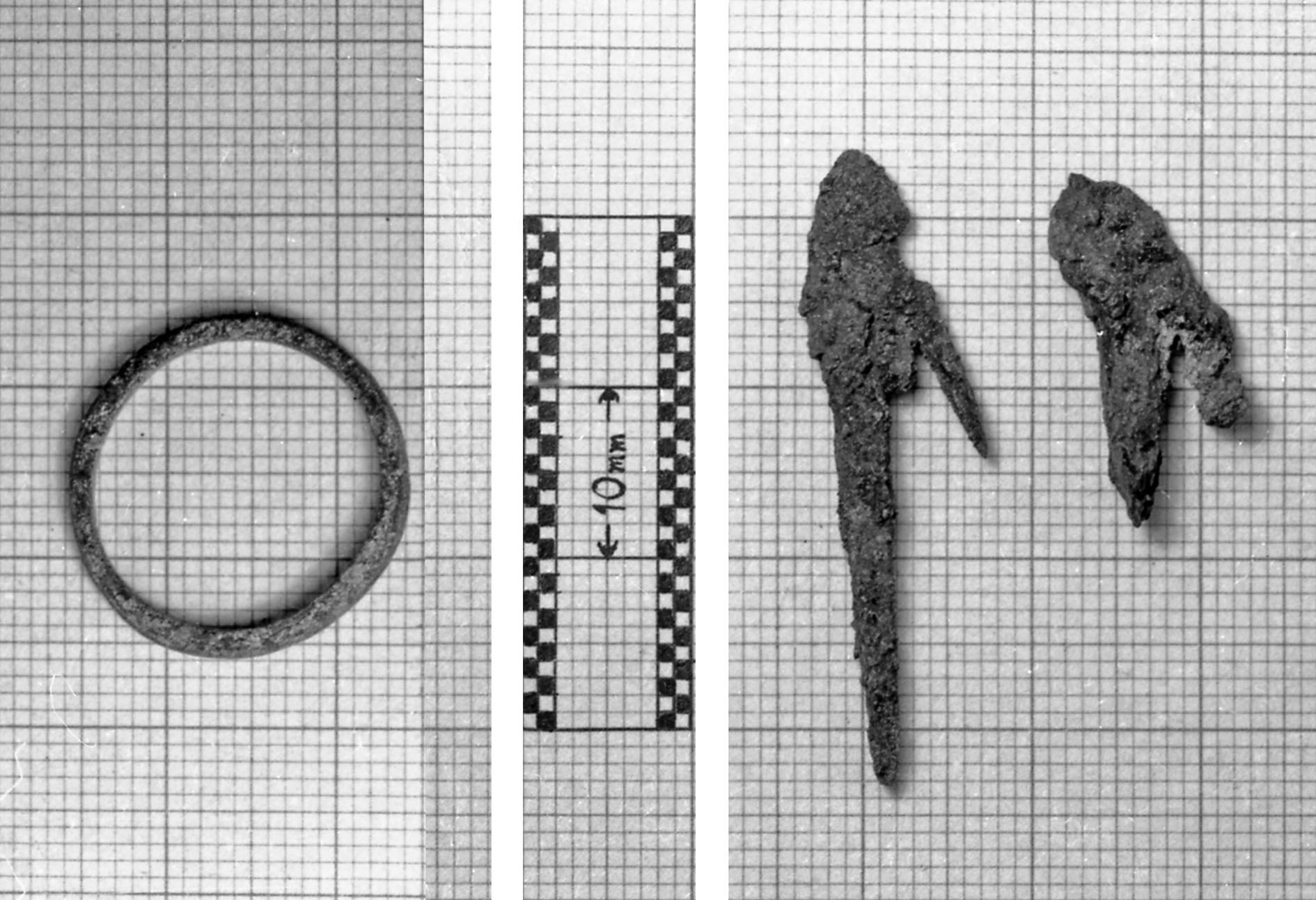
Grave 3 also contained a range of pottery as well as a metal bell and arrow heads; the decayed remains of what may have been a leather quiver, and a bow-string may indicate the presence of other archery equipment, not uncommon in this period. Small silver rings were found in both these graves.
 ASSN 1963-1969